Want to be in the loop?
subscribe to
our notification
Business News
REAL ESTATE BUSINESS: RESTRICTIONS FOR FOREIGN INVESTORS
Smaller scope of investment compared to domestic investors
Foreign investors are prohibited from attempting two types of investment activities. First, they cannot sell divided land slots or invest in the development of technical infrastructure for a cemetery in order to transfer the land use rights attached to that infrastructure. Second, with regard to the construction and building of houses, foreign investors cannot purchase to sell, lease, or offer a lease purchase, but can only rent to sublease.
Restrictions on the number of houses permitted for ownership
Under Article 161 of the 2014 Housing Law, foreign-invested enterprises, foreign investment funds, branches of foreign banks operating in Viet Nam and foreign individuals that have been granted entry into Viet Nam may purchase, hire purchase, receive as gifts, inherit or own 30 per cent or less of the apartments in one building. In the case of single dwellings, including villas and semi-detached houses, no more than 250 houses can be purchased, lease purchased, received as gifts, inherited or owned in an area with a population equivalent to a ward-level administrative unit.
Decree 99 issued on October 20, 2015, contains detailed regulations on such cases. Specifically, for investment in commercial houses, where single houses are available for sale or hire purchase in an area with a population equivalent to a ward-level administrative unit, the foreign organisation or individual may own a number of individual houses as follows:
- One project with fewer than 2,500 single houses: Foreign organisations and individuals are allowed to own no more than 10 per cent of the total number of houses in the project;
- One project with 2,500 single houses: Foreign organisations and individuals are allowed to own no more than 250 houses in the project;
- Two or more projects with a total of 2,500 or fewer single houses: Foreign organisations and individuals are allowed to own no more than 10 per cent of the total number of houses in each project.
Limiting proceeds before buying and selling real estate that will be formed in the future
The payment of a contract value for real estate that will be formed in the future is done in several stages, based on construction progress. Before handing over the house or construction project to the customer, foreign-invested enterprises are only permitted to collect up to 50 per cent of the contract value, while the maximum rate applied to domestic investors is 70 per cent.
Risk of land retrieval
In reality, many investors working on real estate projects are unable to complete them on time and end up having their land retrieved. As investors still encounter difficulties related to administrative procedures and fail to reach an agreement with the locals when providing compensation and ensuring site clearance, they are often faced with land retrieval.
In addition, in order to be approved, investment projects in the real estate business must conform to the plan for land use in urban and rural areas. It is mandatory for plans to be confirmed by the concerned authorities.
Source VNS
Related News
MEMBER CORNER / PROMOTIONS
KNIC EXCLUSIVE GATHERING & NETWORKING 2026: A NEW MEETING POINT FOR INDUSTRIAL INVESTMENT IN HANOI
On October 2, 2026, KN Industrial City (KNIC) will host KNIC Exclusive Gathering & Networking 2026 at the National Innovation Center (NIC) in Hanoi. Building on a series of business networking and investment promotion activities in Ho Chi Minh City and Dong Nai, the event marks a new opportunity for KNIC to connect with businesses, investors, and partners in Northern Vietnam.
MEMBER CORNER / PROMOTIONS
KNIC ENGAGES WITH GOVERNMENT AND HIGH-TECH BUSINESS COMMUNITIES IN CHINA
From Beijing to Shandong, KN Holdings and KN Industrial City are continuing to expand their engagement with government authorities, trade promotion organizations, and high-tech business communities in China. In Beijing, the delegation met with the Center for International Economic and Technological Cooperation under the Ministry of Industry and Information Technology (MIIT), exchanging perspectives on industrial and technology cooperation between the two markets.
VIETNAM ECONOMY INVESTMENT
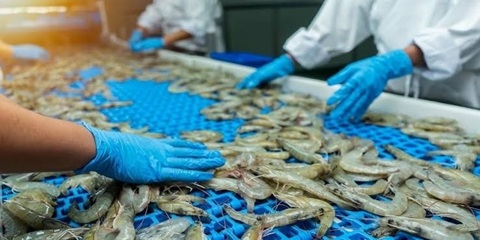
VIETNAM’S TRADE TOPS $825 BILLION BY MID-SEPTEMBER
Figures released on September 21 showed goods trade reached nearly $55 billion in the first 15 days of September alone, bringing cumulative turnover since the beginning of the year to more than $825 billion. The strong growth reflects robust trade flows, with demand for consumer goods and production inputs remaining high.

TECHNOLOGY
VIỆT NAM'S BUSINESSES MOVE TOWARDS AI AGENTS
Việt Nam’s AI landscape is entering a new phase as businesses move beyond generative AI (GenAI) tools designed to assist human users towards autonomous AI, agentic AI and AI agents that can take action with limited supervision, experts have said. The shift comes as Việt Nam seeks to accelerate science and technology, innovation and digital transformation under Politburo Resolution 57-NQ/TW, issued on December 22, 2024.
GARMENT / TEXTILE
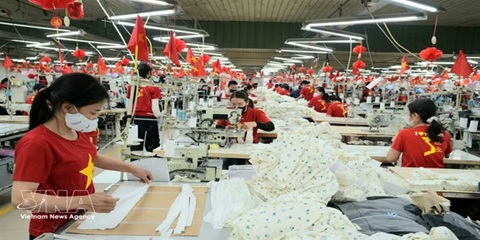
VIỆT NAM TARGETS $48 BILLION IN TEXTILE-GARMENT EXPORTS
Việt Nam’s textile and garment industry is facing both opportunities and challenges amid complex and unpredictable developments in the global market, prompting businesses to improve growth quality, optimise production costs and enhance adaptability in pursuit of an export turnover of about $48 billion this year. The target is considered an important milestone that requires concerted efforts from management agencies and the business community.
INFRASTRUCTURE / CONSTRUCTION / LOGISTIC / PORT
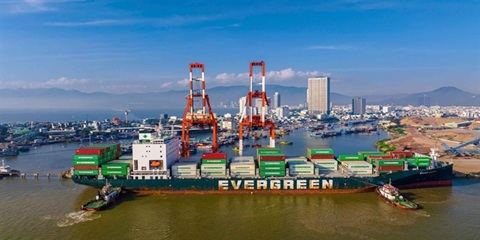
CUTTING LOGISTICS COSTS KEY TO BOOSTING EXPORTS
Reducing costs has become an increasingly urgent priority for import-export activities, particularly logistics costs, a conference in Hà Nội was told on Tuesday. According to Deputy General Director of the Ministry of Industry and Trade's Agency for Foreign Trade, Trần Thanh Hải, import-export activities has remained a bright spot for the economy in recent years, playing an important role and helping drive macroeconomic growth.
Events Sponsors






















